
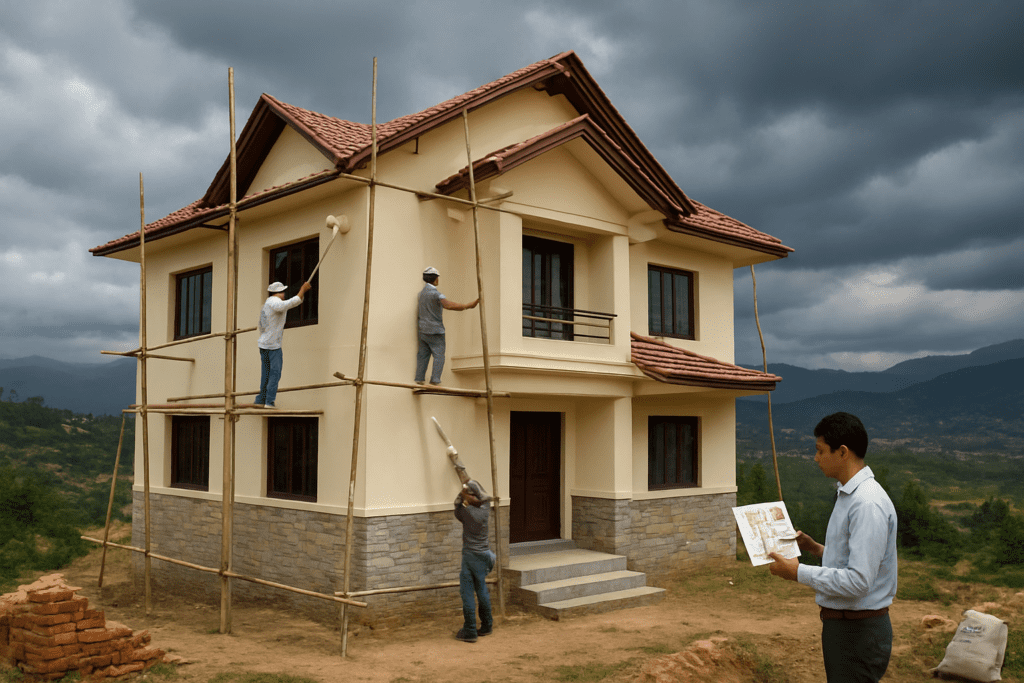
Why the Right Paint Brand Matters for Your Nepal Home
Choosing the best paint brand in Nepal isn’t just about colour—it’s about protecting your largest investment from monsoon rains, harsh sun, and the daily wear of family life. For Non‑Resident Nepalis (NRNs) building from abroad, this decision carries even more weight. You need a finish that lasts, a brand you can trust, and a process that doesn’t demand constant oversight. This 2026 guide pits the two biggest names—Asian Paints and Berger—against each other, helping you decide with clarity whether you’re painting a single flat or a multi‑storey home.
The Main Paint Brands in Nepal
Walk into any Kathmandu hardware store and you’ll find a crowded shelf: Asian Paints, Berger, Nippon, Jotun, Shalimar, and local manufacturers. Among these, Asian Paints and Berger dominate residential projects. They’ve built wide dealer networks, offer full product ranges from budget emulsions to weather‑resistant coatings, and have proven themselves in Nepal’s unique climate. Jotun and Nippon often cater to premium commercial spaces, while Shalimar fills the value‑end niche. But for the typical NRN home—whether a hillside bungalow or a city apartment—the choice almost always narrows to Asian Paints versus Berger. Both comply with Nepal Building Code (NBC) standards for emission and fire safety, but they approach performance differently. Let’s break it down.
Asian Paints vs Berger at a Glance
Before diving into specific products, here’s a quick comparison to set the stage:
- Asian Paints: Best known for a vast range spanning every budget. Nearly every painter in Nepal knows this brand, and its shade cards are everywhere. Good for middle‑class homes and value‑conscious projects.
- Berger: The go‑to for premium interior finishes and heavy‑duty exterior coatings. It has a strong reputation in high‑rainfall zones like Pokhara or the Tarai during monsoon.
Prices vary widely by product line, tint, and dealer, but here are typical 2026 figures to guide you (always confirm locally):
Budget Interior
Asian Paints Tractor Emulsion: Rs. 150–220 per litre
Berger Budget Emulsions: comparable, around Rs. 160–240 per litre
Premium Interior
Asian Paints Royale range: Rs. 600–1,800 per litre depending on the variant
Berger Silk Luxury: Rs. 1,400–2,100 per litre
Exterior
Asian Paints Apex Ultima: Rs. 350–500 per litre
Berger Weathercoat All Guard: Rs. 1,300–2,400 per litre
These are approximate per‑litre rates; total project cost depends on surface area, number of coats, and application method. For a detailed breakdown, see our guide on house painting costs in Nepal.
Asian Paints: Nepal’s Household Name
Asian Paints entered the Nepali market decades ago and has built an unrivalled distribution network—from urban wholesalers to local hardware stores in remote hill towns. This accessibility makes it the default for many homeowners, and its product lineup covers every need.
Tractor Emulsion: The Budget Workhorse
At Rs. 150–220 per litre, Tractor Emulsion is the most common interior wall paint in Nepal. It’s not washable, but it delivers a smooth matte finish perfect for bedrooms, living areas, and rental units. For NRNs furnishing a property on a tight budget, Tractor Emulsion applied with a proper primer offers great value. It comes in thousands of shades, so you won’t sacrifice aesthetics.
Apex Ultima: Exterior Protection Without the Price Shock
Nepal’s monsoon rains and strong UV demand a tough exterior paint. Apex Ultima (Rs. 350–500/L) is a popular middle‑tier choice. It’s silicone‑based, water‑repellent, and resists algae and fungi—important in Kathmandu’s humid valleys or Tarai summers. It won’t crack like cheaper distempers and retains colour well for 3–4 years. Many NRNs choose Apex Ultima for the entire house exterior and then splurge on premium interiors.
Berger: Where Premium Finishes and Monsoon‑Proofing Shine
Berger may not match Asian Paints’ volume, but it wins loyal fans among architects and discerning homeowners. Its products are engineered for tough conditions and exceptional aesthetics.
Silk Luxury: A Living Room That Feels Luxurious
Silk Luxury (Rs. 1,400–2,100/L) is a high‑end water‑based emulsion that dries to a silky smooth finish with a subtle sheen. Unlike cheap paints, it’s washable—chai spills and little fingerprints wipe off easily. In Nepali homes where the living room is a showpiece, Silk Luxury makes walls feel deep and rich. It pairs beautifully with traditional carved woodwork or modern minimalist décor. If you’re designing an NRN home to impress visiting relatives, this is the go‑to.
Weathercoat All Guard: Monsoon‑Ready Exterior
Nepal’s monsoon can deluge a house for months. Weathercoat All Guard (Rs. 1,300–2,400/L) is a premium exterior coating with advanced water‑repellent technology. It’s designed to bead water immediately, preventing damp ingress that leads to peeling, efflorescence, and mould. In places like Pokhara or Dharan, where a single storm can expose walls to driving rain, All Guard pays for itself in avoided repairs. It also resists fading from harsh Himalayan UV, keeping your home looking fresh years later.
Which Brand Should You Choose? A Room‑by‑Room Strategy
There is no single “best” brand—there’s the best brand for each situation. Here’s how to mix and match wisely, a strategy our construction managers often recommend to NRNs:
For Budget‑Conscious Homes or Rental Units
Use Asian Paints Tractor Emulsion for all interior walls. It delivers a clean, uniform look for minimal rupees. On the exterior, opt for Asian Paints Apex Ultima—it’s the cheapest way to get decent weather protection without breaking the bank.
For Mid‑Range Family Homes
Go with Asian Paints Royale for living areas and master bedrooms (a step up in washability), and Tractor Emulsion for guest rooms and corridors. Exterior: stick with Apex Ultima if you’re not in a monsoon hotbed; if you are, invest in Berger Weathercoat All Guard on the most exposed walls—south‑facing and rain‑prone sides—while using Apex on sheltered walls.
For Premium Interiors and Harsh Climates
Choose Berger Silk Luxury for all main living spaces—it transforms the feel of a home. Pair it with Weathercoat All Guard on every exterior wall. Yes, it costs more up front, but you’ll recoup that in durability and the sheer pleasure of a beautiful interior. For NRNs who want a “set‑and‑forget” finish while they’re abroad, this combination brings peace of mind.
Nepal‑Specific Painting Tips for NRNs
Building from overseas introduces unique challenges. Here are a few insights to get the best result:
- Primer is non‑negotiable: Nepali concrete and brick tend to be porous and alkaline. Always apply a coat of alkali‑resistant primer (brand‑matched) before your finish paint. This prevents peeling and efflorescence, especially in new construction.
- Monsoon timing: Avoid painting exterior surfaces during the monsoon (June–August). Paint needs dry wall and low humidity to cure properly. Plan your finishing phase for October–November or February–April.
- Shade consistency: When you’re not on‑site, colour can vary. Use the brand’s official shade card and ask for a sample draw‑down before bulk purchase. Ghar Naksa can coordinate this with our site supervisors.
- Remittance planning: Have your construction manager lock in prices with a dealer and pay in tranches. Prices can fluctuate, so if you’re sending money from abroad, a trustworthy local partner helps avoid surprises.
Frequently Asked Questions
Which is better, Asian Paints or Berger?
Both are excellent, but they excel in different areas. Asian Paints offers a wider range of affordable options and has the largest shade selection. Berger leads in premium interior finishes and heavy‑duty weather coatings. The right choice depends on your room, location, and budget.
What is the best paint for exteriors in Nepal?
For monsoon‑prone regions, Berger Weathercoat All Guard and Asian Paints Apex Ultima are top choices. All Guard is more expensive but provides superior water resistance. Apex Ultima is a reliable, budget‑friendly option for most homes. Always use a primer and apply during dry weather.
How much does paint cost per litre in Nepal?
Prices vary widely: budget interior emulsions start around Rs. 150 per litre, while premium interior paints like Berger Silk Luxury can exceed Rs. 2,000 per litre. Exterior paints range from Rs. 350 (Apex Ultima) to Rs. 2,400 (Weathercoat All Guard). Always get a current quote from a local dealer.
Can I use cheaper paint indoors and a premium exterior paint?
Yes, and this is a smart strategy. Interior walls don’t face weather, so a good value paint like Asian Paints Tractor Emulsion works well. Exterior walls need tough protection, so spending more there is a wise investment. Many NRNs adopt this mixed approach to balance cost and durability.
How can I choose paint remotenly while building in Nepal?
It’s challenging but manageable. Work with a construction management service like Ghar Naksa. They’ll share shade options via photos and video calls, source genuine products at fair prices, and oversee application. You approve from abroad, and they handle the rest—including progress updates and quality checks.
Let Ghar Naksa Handle Your Home’s Finishing—From Anywhere
Painting your Nepal home should be exciting, not stressful. At Ghar Naksa, we specialise in full‑cycle construction management for NRNs—from foundation to final coat. Our team selects the right paint for every wall, negotiates with trusted dealers, and ensures professional application that meets your timeline and budget. Whether you’re building a modern house in Kathmandu or a hillside retreat in Pokhara, we bridge the distance so you get a home that feels personal and lasts for years.
Ready to talk about your project? Explore our interior finishing services or check our construction material price list to plan smarter. For a complete guide to budgeting your paint job, don’t miss our house painting cost in Nepal article. Ghar Naksa—building your dream, even when you’re miles away.
Related: Which Brand Should You Choose?