
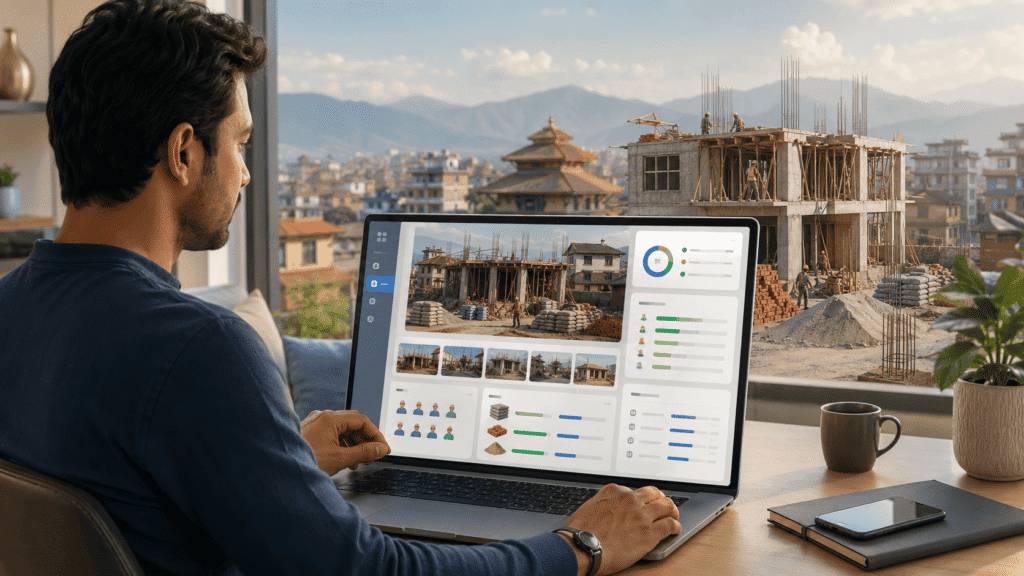
For Nepalis living abroad (NRNs), building a house back home is a dream—but managing it from thousands of miles away can feel like a nightmare. Without eyes on the site, how can you trust that construction is on track, materials are correct, and money isn’t being wasted? The answer lies in a structured, tech-enabled monitoring approach. This guide shows you exactly how to monitor house construction in Nepal from abroad, so you stay in control without being physically present.
The Trust Challenge for NRNs Building in Nepal
Distance breeds uncertainty. When you’re not there to see the daily progress, communication gaps widen. You might rely on occasional phone calls with a contractor or updates from relatives, but without technical oversight, costly mistakes can slip through—substandard materials, skipped steps, or bloated labor charges. Nepali construction often faces challenges like monsoon delays, unapproved design changes, and lax adherence to the National Building Code (NBC). For NRNs, the fear of being cheated is real. That’s why a remote monitoring system is not just helpful; it’s essential for protecting your investment and your peace of mind.
Key Remote Monitoring Methods for Your Nepal Home
Modern tools and disciplined record-keeping can bridge the distance. Here are proven methods to monitor your project effectively.
1. Daily Site Photos and Videos
Request your on-site contact or contractor to send daily photos and short videos from fixed angles. This helps you track incremental progress, spot delays, and verify that work aligns with the plan. Use cloud storage like Google Drive or a dedicated WhatsApp group for easy access and chronological reference. Over time, this visual timeline becomes an invaluable record.
2. Weekly Engineer Reports
A professional weekly report should include work completed, upcoming tasks, weather impacts (especially monsoon considerations), and any issues encountered. If you don’t have a dedicated engineer, consider hiring a local construction supervisor. These reports provide a formal record and clear accountability, helping you catch deviations early.
3. Material Delivery Records
One of the biggest concerns is material theft or substitution. Require photographic proof of materials upon delivery, including brand names, quantities, and invoices. Keep a shared spreadsheet or use a Construction Material Tracker to log every batch of cement, steel, bricks, and aggregates. This ensures you’re paying only for what actually arrives on site.
4. Labor Attendance Tracking
Labor costs can balloon if unchecked. Ask for daily or weekly attendance sheets signed by workers. Some sites use biometric attendance or simple photos of workers at the start and end of each day. This data helps cross-check labor bills and ensures you aren’t overcharged for phantom workers.
5. Payment Milestone Verification
Never release payments based on time alone. Tie payments to clearly defined, verifiable milestones—foundation complete, plinth beam, slab casting, roofing, etc. Require photographic evidence and even live video calls before approving each stage. This protects against incomplete or poor-quality work and aligns contractor incentives.
6. Real-Time Video Calls
Schedule live video walk-throughs at critical stages. Use WhatsApp, Zoom, or dedicated construction apps. Walk through each room, ask to see specific measurements, and discuss any concerns on the spot. Real-time interaction reduces the chance of misinterpretation that static photos might cause.
7. Issue Tracking System
Create a shared document (like Google Sheets) to log non-conformance issues, snags, and requested changes. Assign responsibility and track status until resolution. This ensures nothing falls through the cracks and holds the contractor accountable for corrections, while giving you a clear paper trail.
8. Construction Material Tracker
A specialized tool like GharNaksa’s Construction Material Tracker integrates material delivery, consumption, and stock levels into one dashboard. This is especially useful for NRNs because it provides real-time visibility into the most variable cost component of the build. Combined with professional supervision, it drastically cuts the risk of overbilling or theft.
Essential Remote Monitoring Checklist for NRNs
Use this checklist to set up your remote oversight system:
- Hire a local engineer or trusted supervisor (consider professional services if family isn’t technical).
- Set up a daily photo/video reporting schedule.
- Establish a weekly written report from the site engineer.
- Implement a material tracking system (log every delivery with photos and invoices).
- Collect labor attendance records weekly.
- Define payment milestones tied to verified completion.
- Schedule live video inspections at key stages (foundation, plinth, slab, roof, finishing).
- Use a shared platform (Google Drive, WhatsApp group, dedicated portal) for all documents.
- Maintain an issue log and review it weekly.
How GharNaksa Simplifies Remote Construction Monitoring
For NRNs who need peace of mind, GharNaksa offers comprehensive construction supervision and full management services. Our team provides daily site updates, detailed weekly reports, material tracking, and transparent payment handling. As a Kathmandu-based company with deep experience in Nepali building codes (NBC) and local contractor dynamics, we act as your on-ground representative—ensuring your house is built to specification, on time, and within budget. We also guide you through the naksa pass process and help you understand the cost to build a house in Nepal, so there are no surprises. With GharNaksa, you can truly build your dream home from abroad with confidence.
FAQs About Monitoring House Construction from Abroad
How can I be sure the materials delivered match what I paid for?
Require photo evidence of every delivery with clear labels, brand names, and quantities. Cross-reference with invoices and maintain a material tracker. Professional supervision services also verify material quality on arrival, checking for defects or substitutions.
Can I rely on my relatives to monitor construction?
While relatives can help with general oversight, they often lack the technical knowledge to spot structural flaws, code violations, or cost overruns. The best approach is to combine a family member’s presence with a professional site supervisor or engineer who can read drawings and enforce quality standards.
How often should I receive updates?
Ideally, you should receive daily photo updates and a more comprehensive written report at least weekly. Critical phases—like foundation casting, slab pouring, or roof work—should trigger a scheduled live video call for real-time verification.
What if the contractor deviates from the approved naksa?
An approved building permit (naksa pass) is legally binding. Any deviation can lead to municipal fines or structural risks. Regular monitoring with an engineer’s oversight helps catch and correct deviations early. If changes are necessary, they must be formally approved by the local municipality. GharNaksa can help manage this compliance.
Don’t let distance compromise your dream home. With the right systems and support, you can oversee every brick laid from abroad. Ready to build trust? Contact GharNaksa today for reliable remote construction monitoring in Nepal—we’ll be your eyes and ears on the ground.