
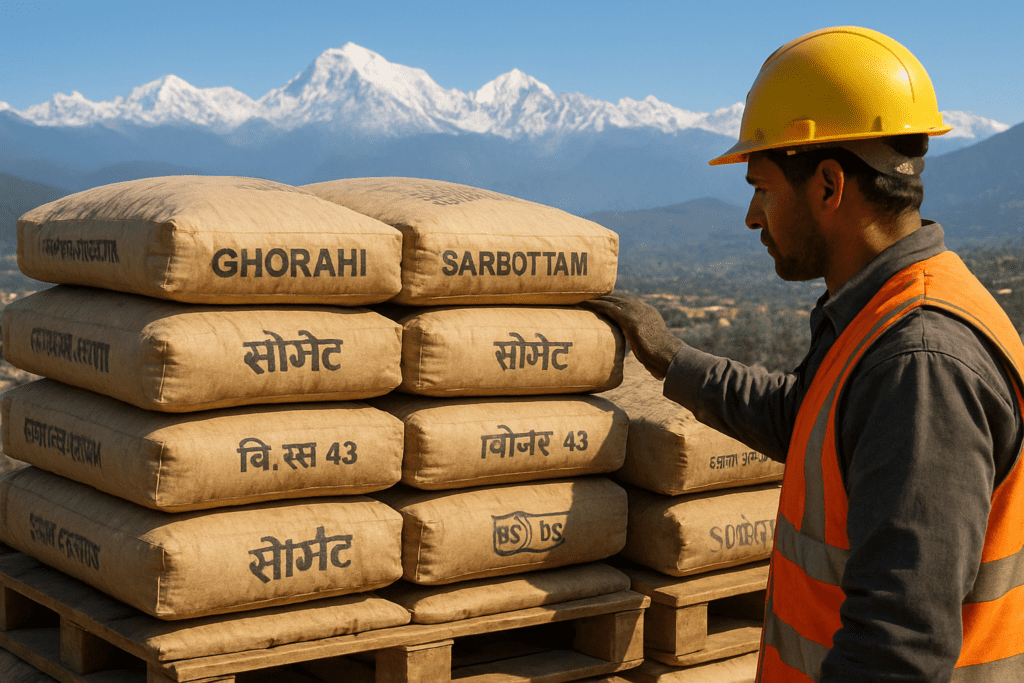
Introduction: Why Cement Prices Matter for Your Nepal Home
If you’re building a home in Nepal—especially as an NRN (Non-Resident Nepali) managing construction from abroad—understanding the cement price in Nepal is essential. Cement is the backbone of any structure, from foundation to roof slab, and its cost can swing your budget by lakhs of rupees. As of June 2026, prices have stabilised somewhat after a volatile 2025, but regional variations, brand choices, and seasonal demand still cause fluctuations. In this guide, we break down the latest rates per 50kg bag for OPC, PPC, and top brands, along with practical tips to ensure you get quality material without overpaying.
We’ll cover everything from the difference between OPC and PPC to where to buy, how to verify quality, and what the Nepal Building Code (NBC) says about earthquake-resistant construction—critical for projects in the Himalayas. Whether you’re laying a foundation in Kathmandu or a hillside retreat in Pokhara, this post will help you budget smarter.
Current Cement Prices in Nepal (June 2026)
Cement prices in Nepal are quoted per 50kg bag and vary by type, brand, and location. Typically, Ordinary Portland Cement (OPC) costs more than Portland Pozzolana Cement (PPC) because of its higher early strength. However, exact figures depend on whether you’re buying from a depot in the Terai or a remote hilly area—transportation adds NPR 50–150 per bag outside urban centers. Below is a general market overview based on recent dealer surveys and industry reports. Always confirm with local suppliers before ordering.
Price Ranges for Popular Brands (NPR per 50kg bag)
| Brand | OPC (NPR) | PPC (NPR) | Remarks |
|---|---|---|---|
| Ghorahi | 850–980 | 750–900 | Premium brand, high strength 43/53 grades |
| Sarbottam | 720–900 | 590–875 | Good value, widely trusted |
| Hongshi/Shivam | 630–850 | 520–730 | Competitive pricing, mass-market |
| CG Cement | 850–950 | 800–900 | Higher-end, consistent quality |
| Arghakhanchi | 750–820 | 640–750 | Budget-friendly favorite |
| Jagdamba | 780–850 | 610–750 | Mid-range, good availability |
| United/Maruti | 700–850 | 700–790 | Regional variation |
| Others (Udayapur, Reliance, Agni) | 700–920 | 600–800 | Local brands, check certification |
Note: Prices are indicative for the Kathmandu valley. In remote districts, add 10–20% for logistics. Bulk orders (10+ tons) often get NPR 30–50 per bag discount.
The overall market range for OPC is roughly NPR 750–1,000+ per bag, while PPC sits between NPR 600–900. Specialty cements (sulphate-resistant, white cement) can exceed NPR 1,200 per bag. When calculated per ton (20 bags), expect to pay NPR 14,000–19,600 depending on brand and type.
OPC vs. PPC: Which One to Choose?
Understanding the difference between OPC and PPC is crucial for structural integrity. Here’s a quick comparison tailored to Nepal’s climate and seismic reality.
Ordinary Portland Cement (OPC)
- Strength: Gains 70–80% of its final strength within 7 days, making it ideal for fast-track projects.
- Best for: Beams, columns, slabs, and any structural member in earthquake-resistant designs (NBC 105:2020 recommends high-grade OPC for critical elements).
- Grades: Grade 43 (for general RCC) and Grade 53 (for high-strength concrete, e.g., bridges, multi-storey buildings).
- Cost: Usually NPR 50–100 more per bag than PPC.
Portland Pozzolana Cement (PPC)
- Durability: Lower heat of hydration reduces cracking in mass pours; better resistance to sulphates and moisture.
- Best for: Masonry mortar, plastering, flooring, and non-structural works. Also suitable for residential foundations in low-rise buildings.
- Cost: More economical, saving NPR 100–150 per bag on average.
For NRNs constructing a modern home in Nepal, we recommend using OPC 53 Grade for columns and beams, and PPC for brickwork and plastering. This mix balances safety and budget. Always insist on NS (Nepal Standard) certified cement—look for the NS mark on each bag.
Factors That Influence Cement Prices in Nepal
Why do cement prices change every week? Several dynamics affect the rate you pay:
- Raw Material & Fuel Costs: Clinker (imported from India) and coal prices drive factory prices. Since Nepal imports most clinker, currency exchange rates matter.
- Transportation: From the factory (mostly in the Terai) to hills like Kathmandu or mountain regions, each bag incurs NPR 50–150 extra. During monsoon, landslides can disrupt supply chains, causing spikes.
- Seasonal Demand: Post-monsoon (October–November) and pre-monsoon (March–May) are peak construction windows. Prices often creep up 3–7% during these months.
- Government Policy: Occasional price caps and tax adjustments can briefly lower rates. For instance, a 2024 agreement aimed to keep ex-factory prices under NPR 550 for OPC, but retail rates are higher due to margins and transport.
- Brand & Packaging: Premium brands like Ghorahi and CG command higher prices due to perceived quality. Some suppliers offer loose cement (unbranded) at cheaper rates, but this is risky without clear sourcing.
Tips for Buying Cement in Nepal
Getting the right cement at the right price requires a bit of know-how, especially if you’re not on-site. Follow these tips to protect your investment:
- Verify Freshness: Cement loses strength over time. Check the manufacturing date on the bag—ideally use within 90 days of packing. Never buy if the bag is damp or has lumps.
- Demand NS Certification: Nepal Standard certification (NS 385 for OPC, NS 148 for PPC) ensures minimum quality. If a bag lacks it, walk away.
- Get Multiple Quotes: Contact at least three authorised dealers in your area. Prices can vary by NPR 20–40 per bag for the same brand.
- Consider Bulk Buying: If your project needs over 200 bags, negotiate for a wholesale rate. It can save you NPR 7,000–10,000 overall.
- Storage: Keep cement off the ground on wooden planks, away from moisture, and use within 1 month of delivery. Improper storage can ruin entire batches.
- Beware of Counterfeits: Some brands have reported duplicate bags in the market. Buy from authorised dealers and cross-check the hologram or QR code if available.
Earthquake Safety and Cement Choice
Nepal is a high-seismic zone; the 2015 earthquake taught harsh lessons. The government’s NBC 105 mandates ductile detailing in reinforced concrete frames. This requires cement that meets grade 53 specifications for critical elements. While OPC 53 is costlier, it provides the necessary tensile strength when paired with proper steel reinforcement. For NRNs building back home, compromising on cement grade is not worth the risk—opt for OPC 53 for the structural skeleton. PPC can handle plaster and masonry. GharNaksa’s design team always specifies cement types in the structural drawings—let us know if you need a review of your materials list.
How to Get the Latest Cement Price in Your Area
Cement rates are dynamic. To get the most accurate pricing:
- Call local dealers: Hardware associations in your district often post daily rates. In Kathmandu, the Nepal Cement Dealers Association can guide you.
- Visit manufacturer websites: Brands like Ghorahi and Sarbottam update price lists periodically.
- Consult your contractor: But always cross-check, as some contractors inflate material costs.
- Use online platforms: Sites like HousingNepal and Hamro Nirman post regular updates; however, verify with a real dealer before budgeting.
If you’re abroad, your onsite family or a trusted project manager can send photos of dealer quotations. GharNaksa offers remote construction management services—we help NRNs source materials at fair rates, even from thousands of miles away.
Frequently Asked Questions
What is the price of one bag of cement in Nepal today?
As of June 2026, a 50kg bag of OPC cement costs between NPR 750 and 1,000, while PPC ranges from NPR 600 to 900. Prices vary by brand and location; for example, Ghorahi OPC may cost NPR 950 in Kathmandu but NPR 1,050 in remote areas due to transport.
Which cement is best for house construction in Nepal?
For structural safety, use OPC Grade 53 for foundations, columns, beams, and slabs. PPC is suitable for masonry, plastering, and non-critical works. In earthquake-prone Nepal, never compromise on the cement grade in load-bearing elements.
Why are cement prices higher in hilly regions?
Transportation is the main factor. Cement factories are mostly in the Terai plains; moving bags uphill by truck adds NPR 50–150 per bag. During the monsoon, road damage further spikes costs.
Can I use PPC for RCC work?
PPC can be used for reinforced cement concrete in low-rise buildings, but it gains strength slower than OPC. For multi-storey structures or in seismic zones, structural engineers typically specify OPC. Always follow your building plan’s recommendations.
How can I check the quality of cement on site?
Conduct a simple field test: Take a handful of cement and rub it between your fingers. It should feel smooth, not gritty. If you add a small amount of water to a sample and it forms a stiff paste that does not crumble, it’s likely fine. Also, float test: Throw a pinch on water; good cement sinks. But the best check is the NS mark and fresh date.
Build Smarter with GharNaksa
Whether you’re planning a traditional Newari home in Bhaktapur or a contemporary villa in Butwal, the right cement decision lays the foundation for a lifetime of safety. At GharNaksa, we specialise in house design and construction facilitation for NRNs across the globe. Our team stays updated on material prices, NBC codes, and local market conditions so your project doesn’t face surprises. From concept drawings to final handover, we ensure your home stands strong. Reach out today for a consultation and let’s bring your dream home to life—no matter where you are.