
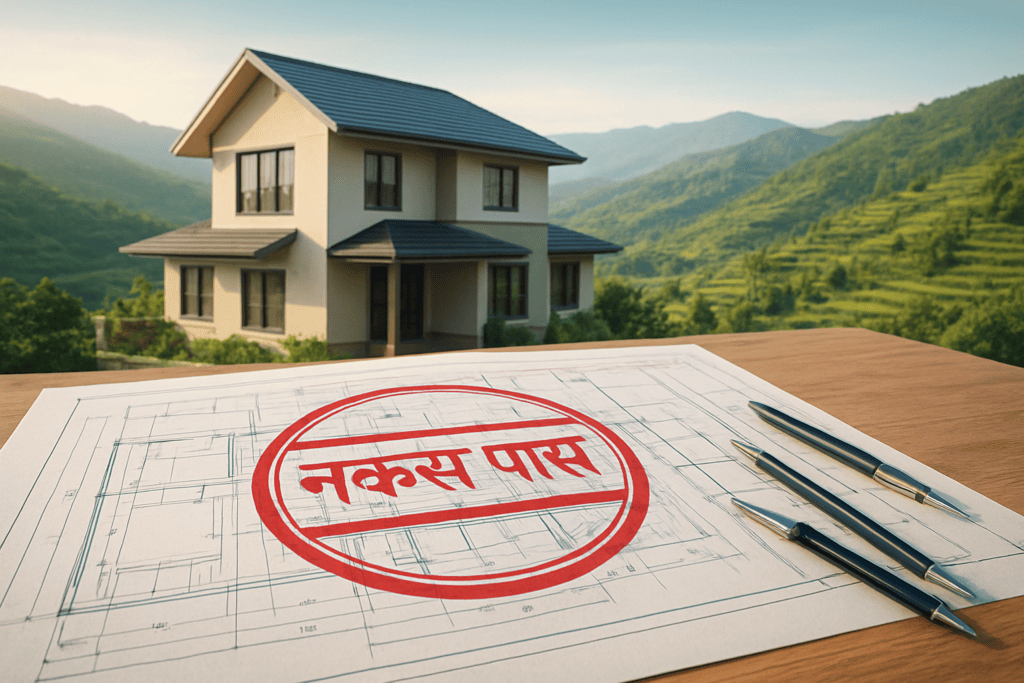
What Does “Naksa Pass” Mean in Plain English?
If you’re an NRN (Non-Resident Nepali) planning to build a house in Nepal, you’ve likely heard the term naksa pass. In English, it translates directly to “map pass” or “plan approval.” But it’s much more than that. Naksa pass is the official construction permit issued by your local municipality (or nagarpalika / gaupalika) after your house’s architectural and structural drawings have been reviewed and approved. It confirms that your building design complies with Nepal’s National Building Code (NBC), local zoning laws, and safety regulations. Without it, your dream home could face legal hurdles, fines, or even demolition.
For those searching “naksa pass in english,” this guide breaks down everything: exact meaning, required documents, price expectations, timeline, and how to avoid the most common mistakes.
Why Is Naksa Pass Necessary for Building a House in Nepal?
Building without naksa pass is illegal. Nepal’s building code enforces strict rules to ensure structural safety, earthquake resilience, and proper land use. Here’s why it’s non-negotiable:
- Legal compliance: Municipalities can fine you heavily or order demolition if you build without approval.
- Loan requirements: Banks and financial institutions in Nepal demand a valid naksa pass before disbursing construction loans.
- Utility connections: Water, electricity, and sewage connections are only provided to legally approved buildings.
- Safety assurance: The process verifies earthquake-resistant design and adherence to NBC standards, critical in Nepal’s seismic zone.
- Property resale: An unapproved house loses significant market value and is hard to sell or transfer.
In short, naksa pass is the foundation of a trouble-free construction journey.
Key Documents Required for Naksa Pass in Nepal
Gathering the right paperwork is half the battle. While requirements can vary slightly between municipalities, the core documents are almost universal:
- Land ownership certificate (Lalpurja): Original and photocopy proving you own the plot.
- Citizenship certificate: A copy of the landowner’s Nepali citizenship; for NRNs, a valid passport and NRN card often suffice.
- Recent land revenue receipt: Proof that property tax is paid up to date.
- Architectural drawings: Floor plans, elevations, sections, and site plan—prepared by a licensed architect or draftsman.
- Structural design and calculations: Prepared by a licensed structural engineer, especially for multi-story or modern designs, to demonstrate earthquake resistance.
- Soil test report: Some municipalities now require a geotechnical investigation report for taller buildings.
- Tax clearance certificate: From the municipality to show no outstanding dues.
- Municipality application form: Duly filled, often with photographs of the landowner.
All drawings must be stamped and signed by registered professionals. Incomplete documentation is the top reason applications get stuck.
Naksa Pass Price / Fees in Nepal: How Much Does It Cost?
There is no single fixed price for naksa pass across Nepal. Fees depend on multiple factors:
- Municipality or local body: Metropolitan cities like Kathmandu, Lalitpur, or Pokhara have different rate schedules than smaller municipalities.
- Built-up area: Most places charge per square foot of total floor area. The rate can vary from a few rupees to several hundred rupees per square foot.
- Number of floors: Taller buildings attract higher fees and stricter scrutiny.
- Occupation type: Commercial buildings often pay higher rates than residential ones.
To give a rough idea, a typical residential naksa pass for a 2.5-story house on a 4-ana plot might cost anywhere from NPR 10,000 to NPR 40,000 in municipal fees alone. Professional charges for drawings and structural design are additional. Some municipalities also levy a ‘construction cess’ which is a percentage of the estimated construction cost. Always visit your local municipality’s engineering department or budget an extra NPR 50,000–1,00,000 for documentation and professional assistance when planning your total costs. For a broader perspective, see our guide on cost to build a house in Nepal.
Step-by-Step Naksa Pass Requirements & Process Overview
While the exact procedure can differ by municipality, the typical flow looks like this:
- Hire a registered architect / structural engineer to prepare compliant drawings and designs.
- Collect all required documents (listed above) and fill out the municipality’s application form.
- Submit the complete file at the planning department or building permit section of your local municipality.
- Pay the prescribed fees and obtain a receipt.
- Municipality officials review the documents and drawings; they may visit the site for inspection.
- If discrepancies are found, they issue a notice to revise. Address them promptly.
- Once satisfied, the municipality stamps and signs the naksa — this is your official building permit.
The timeline generally ranges from 15 to 30 days for a straightforward residential project, but it can stretch to 2–3 months if there are objections or incomplete paperwork. For a deep dive into each step, read our detailed Naksa Pass Process in Nepal guide.
Common Mistakes to Avoid During Naksa Pass
Many first-time builders in Nepal, especially NRNs managing the process remotely, fall into these traps:
- Relying on unlicensed draftsmen: Drawings not stamped by a registered professional will be rejected, wasting time and money.
- Ignoring building code setbacks: Not leaving minimum required open spaces on the plot boundary can lead to a flat ‘no’ from the municipality.
- Submitting outdated tax receipts: Property tax must be current; even a few months’ arrears can hold up your file.
- Under-designing for earthquakes: Nepal is in a high-seismic zone. Structural designs must meet NBC 105 or latest standards; skimping here is dangerous and illegal.
- Not involving the bank early: If you need a construction loan, the bank will need a copy of the approved naksa. Delays in approval mean delayed loan disbursement.
- Forgetting to renew old naksa passes: If you had a naksa pass from years ago but didn’t build within the validity period (usually 2 years), it expires and must be renewed.
Avoid these by working with a reliable team who understands both the technical and bureaucratic sides. GharNaksa has helped hundreds of clients sail smoothly through these hurdles.
How Long Does It Take to Get Naksa Pass?
In an ideal scenario with all documents perfect, you can get approval within 15–30 working days. However, reality often includes:
- Queues at municipality offices.
- Multiple rounds of corrections.
- Site inspections delayed due to weather (monsoon can slow things down).
- Political holidays or staff shortages.
We recommend budgeting at least 30–60 days for the entire process from submission to holding the stamped naksa. For NRNs planning a trip to Nepal around construction milestones, it’s wise to start the process months in advance. Professional management services can often expedite this.
Professional Help for Naksa Pass – GharNaksa’s Expertise
Navigating the naksa pass maze doesn’t have to be stressful. At GharNaksa, we offer end-to-end support for NRNs and local homeowners alike: from architectural drawing to municipality liaison, structural design, and final naksa pass handover. Our team includes licensed architects and engineers who understand the ever-changing municipal rules in Kathmandu, Bhaktapur, Lalitpur, Pokhara, and beyond.
If you want a zero-hassle experience, explore our full construction management services in Nepal. We handle everything, so you can focus on your life abroad while your Nepal home takes shape legally and beautifully.
Ready to get your naksa pass without the headache? Contact GharNaksa today for a free consultation.
Frequently Asked Questions About Naksa Pass
What exactly is naksa pass in simple words?
Naksa pass is the official construction permit or building plan approval issued by a municipality in Nepal. It certifies that your house design meets all legal and safety norms.
Is naksa pass mandatory for a small house in a village?
Yes. Even if you are building a small house in a rural municipality, you are legally required to get naksa pass. The process might be simpler, but skipping it is risky.
How much does naksa pass cost for a 2-story house in Kathmandu?
For a typical 2-story residential building of about 1,500 sq. ft. total floor area, municipal fees alone often range from NPR 15,000 to NPR 30,000. This excludes professional fees for drawings and structural design. Always check with the specific municipality for updated rates.
Can I apply for naksa pass online in Nepal?
Some municipalities like Kathmandu Metropolitan City have online portals for building permit applications, but the process still usually requires physical document submission and offline payments. Check your local office’s website. GharNaksa can manage both online and offline submissions for you.
What happens if I build without naksa pass?
Building without approval can lead to fines, stop-work orders, forced demolition, difficulty in getting electricity/water connections, and problems selling the house later. It’s not worth the risk.